
Energy
AI inference is produced by physical computing infrastructure that consumes electricity.
Lower compute demand can reduce the energy attributable to the same accepted business outcome.
When an accepted business outcome can be produced with less compute, the resource burden attributable to that activity can also be reduced.
Resource-impact estimates should stay tied to measured workload reduction and approved conversion factors, rather than being presented as generic sustainability claims.
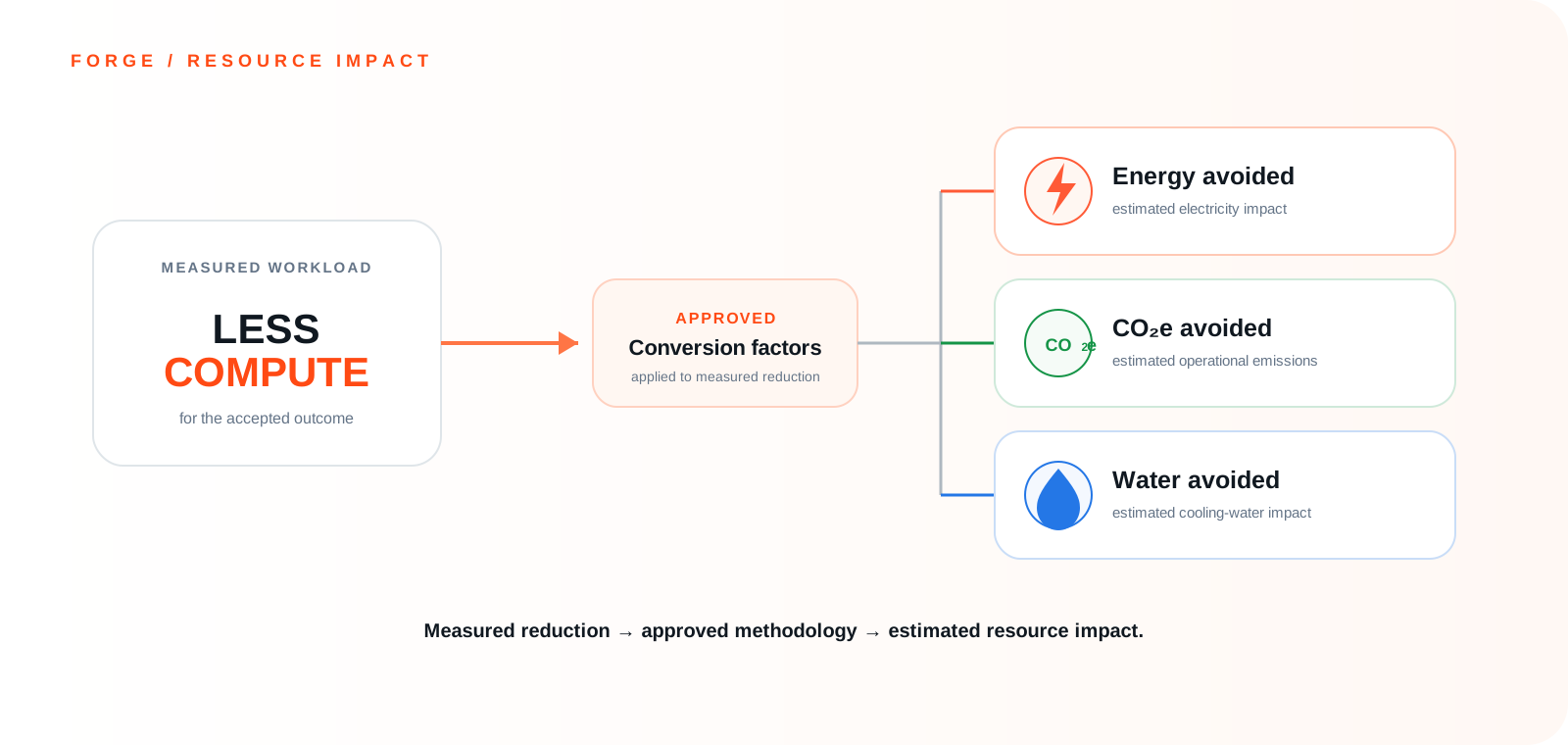
The same resource language used in the customer application carries into the public explanation. Estimates remain tied to measured workload reduction and approved conversion factors, with the methodology available for review.
Physical AI infrastructure links inference demand to energy, cooling and associated emissions. The link is physical rather than abstract: less unnecessary compute can mean less electricity demand, less cooling burden and lower attributable operational emissions.
AI inference is produced by physical computing infrastructure that consumes electricity.
Lower compute demand can reduce the energy attributable to the same accepted business outcome.
Data-center environments can consume water and cooling capacity.
Lower compute demand can reduce cooling and associated water burden depending on the deployment environment.
Electricity generation may carry greenhouse-gas emissions.
Reduced unnecessary compute can reduce the associated operational footprint when approved conversion factors are used.
Start with a high-level qualification conversation. No sensitive or confidential information is required.